I’m Angelica Robbins. I combine creative communication, business analysis, and team leadership experience to make complex information meaningful to the people it needs to reach. My work spans visual identity, public outreach, organizational strategy, and published storytelling.
Safety shapes my approach: anticipating confusion, clarifying responsibilities, and helping people make informed decisions. I bring that perspective to infrastructure communication and collaborative leadership, connecting business goals with the people and communities they affect.
Michigan-based · Marketing, team leadership & public communication
Angelica Robbins · Michigan
Business + designAnalytical thinking and creative execution
Team leadershipEmployee training and supervision
2 published booksWritten and illustrated for children
1,000 recordsAnalyzed in a customer retention project
01 / Selected work
Decisions. Deliverables. Evidence.
A selection of workplace initiatives, academic strategy, and creative projects. Each makes my role and the strength of the evidence visible.
Visual identity / Conservation communication
River Country Campground
Visual identity and conservation communication connecting a local place with the families who use it.
Strategic choice
Connect environmental stewardship with recognizable imagery and educational storytelling.
My contribution
Identity concepts, shoreline documentation, volunteer participation, and children’s conservation writing.
Explore the case study
The opportunity
Make conservation relevant to the families and community who enjoy the river landscape.
My contribution
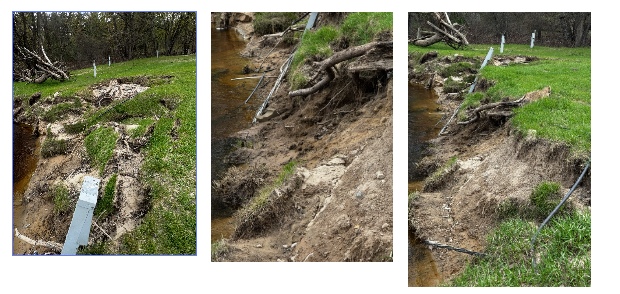
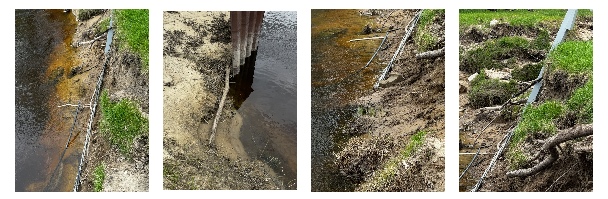
Created visual identity concepts and educational storytelling; participated in a volunteer shoreline stabilization effort with watershed and nonprofit partners; and documented shoreline conditions.
Documenting shoreline conditions
Shoreline conditions and exposed root systems.Closer observations of the riverbank and waterline.
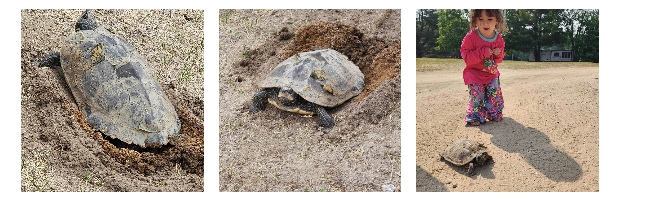
Conservation in everyday moments
Outdoor observations connecting children with Michigan’s wildlife.
Customer retention / Academic analysis
Test the assumption.1,000 observations · Excel · Management recommendation
Academic work / Business analytics
Does satisfaction predict retention?
I used correlation, regression, and PivotTables to test whether customer satisfaction could support retention decisions in the EcoTrend assignment dataset.
My role Data review · Excel analysis · Executive memo Finding Satisfaction alone offered little predictive evidence
Decision supported
Avoid targeting retention initiatives using satisfaction alone; test additional customer and operational data.
Explore the evidence & recommendation
The business question
Can satisfaction scores identify customers at risk of leaving? I checked for missing satisfaction values, retained all 1,000 observations, and compared the statistical findings with group averages.
−0.0419Correlation (r)
0.18%Variation explained (R²)
.186Model p-value
Average satisfaction by retention status
Not retained
3.15
Retained
3.02
Mean satisfaction · Scale: 1–5 · Academic dataset
My recommendation
Do not use satisfaction alone to target retention interventions in this dataset. Collect and test behavioral and operational factors such as purchase frequency, service interactions, and delivery performance before choosing a predictive model.
Limits and next steps
The model did not reach statistical significance at the .05 level. That does not establish that satisfaction never matters. Retention is binary, so logistic regression is a more appropriate next modeling step; any expanded model would require validation. No real-world churn reduction was measured.
Workplace initiative + academic evaluation
Making permit information easier to find
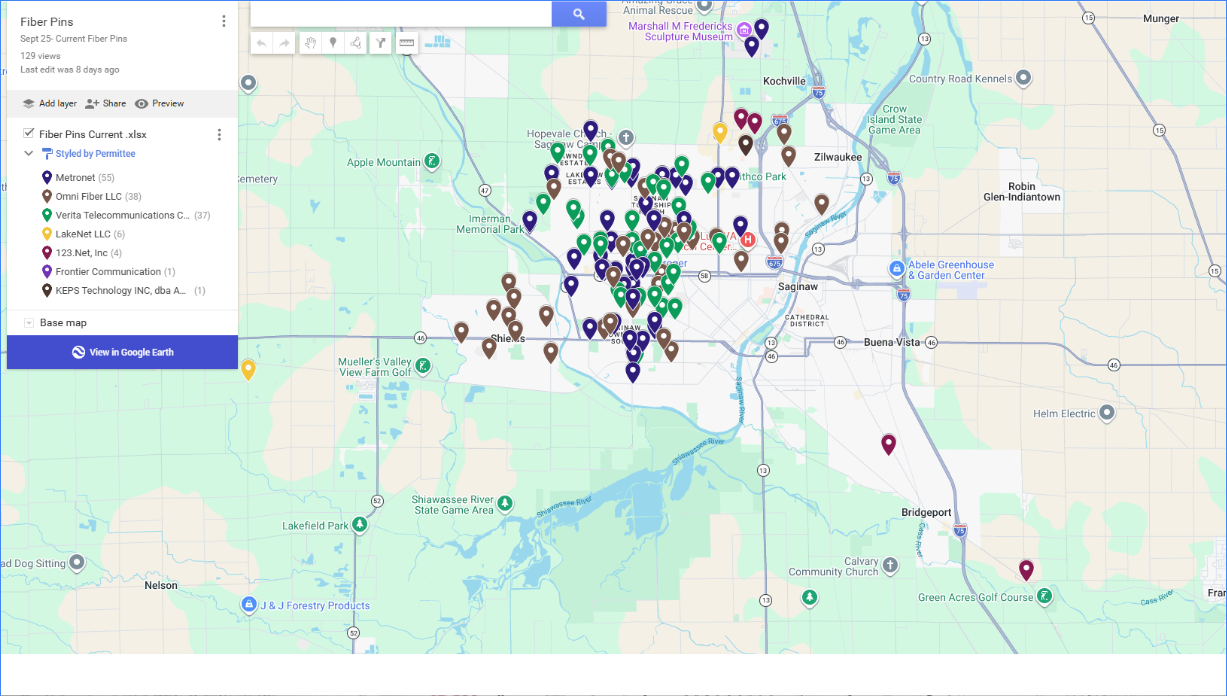
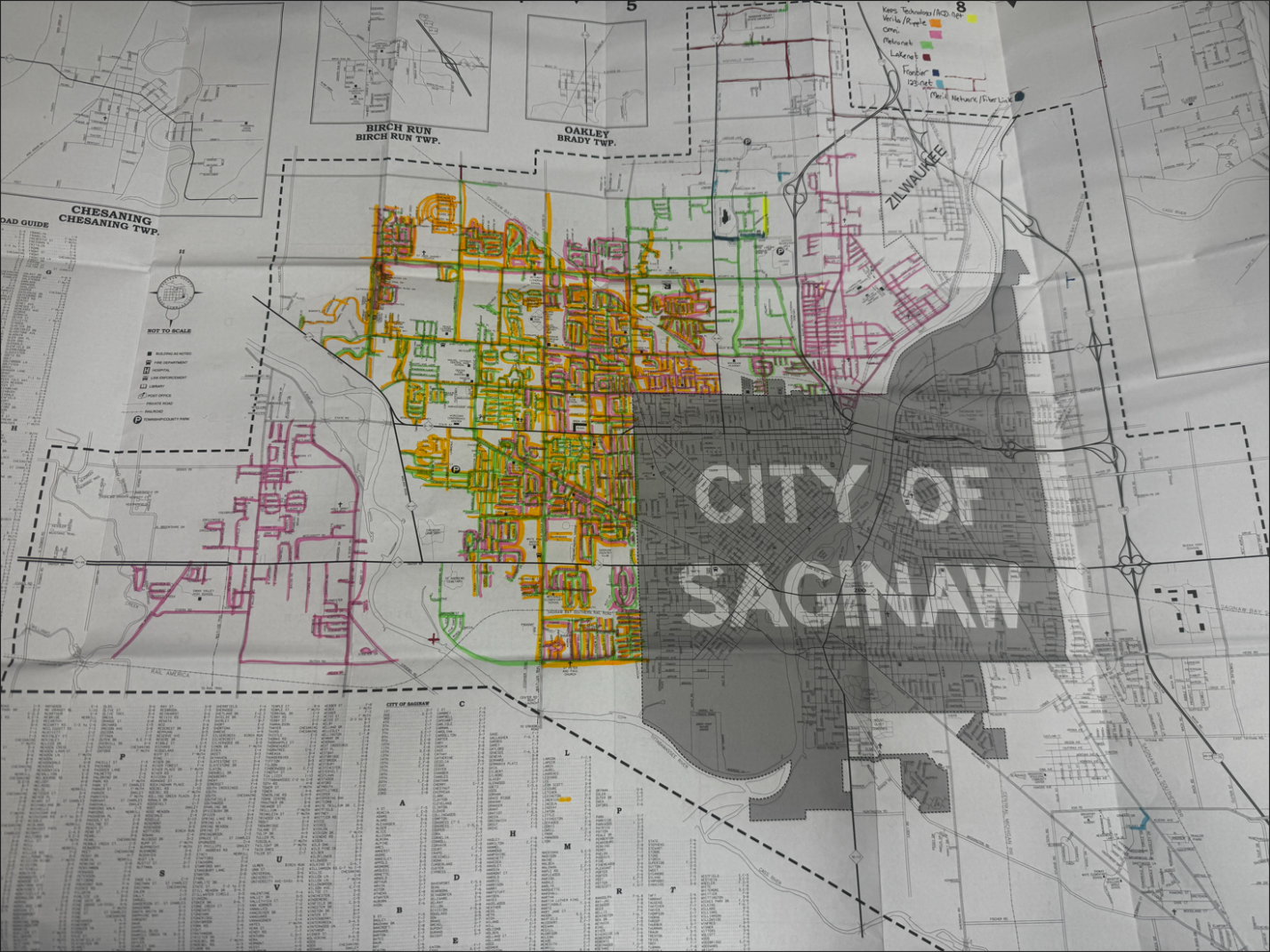
I connected fiber routes, locations, and permit records in a visual reference to support resident inquiries and engineering coordination.
My role Workflow creator · Geographic organization · Communication Tools Oxcart permit plans · Google My Maps · Paper reference
Operational value
Make location-based permit information available for inquiry handling and engineering coordination.
View problem, contribution & next steps
The challenge
When residents reported property concerns or incomplete restoration, identifying the company associated with work at a location could require searching thousands of permits.
What I created
I traced fiber routes from Oxcart site plans and organized permit information in Google My Maps, with a color-coded paper reference as a backup. The workflow helped connect reported locations with a likely company and permit, retrieve available contractor information, and provide complaints and approved specifications to engineering personnel.
Paper reference: making geographic relationships visible.Digital reference: connecting locations with permit information.
What the experience established
In observed instances described in my academic paper, retrieved permit information and specifications were available to support engineering personnel within approximately one hour when field review was warranted. This concerns information availability—not inspection completion, complaint resolution, or measured agency-wide improvement.
What I proposed next
Compare standardized documentation, centralized tracking, and formalized geographic mapping before adding complexity. Define ownership, maintenance, and evaluation criteria. A related communication proposal recommends advance notices 48–72 hours before construction, including company and supervisor contact information.
Existing author-created workflow; broader integration, pilot evaluation, and advance-notice requirements are proposals. This portfolio describes my contribution and does not imply agency endorsement or an adopted agency-wide system.
Marketing + organizational coordination
Audience. Purpose. Accountability.
Academic work / Marketing strategy & governance
A purpose for every social channel
An academic analysis of Amazon’s social media ecosystem, connecting channel choices with departmental needs, reputational risk, and account governance.
My role Research synthesis · Channel recommendations · Process design Deliverable Departmental strategy and approval framework
Management recommendation
Require an audience, accountable owner, escalation process, and evaluation criteria before launching a channel.
Explore the strategy & governance
The challenge
Marketing, customer service, human resources, operations, and public relations use social information differently. A channel needs a defined audience, purpose, owner, and evaluation method.
Selected recommendations from the academic scenario
Departmental priorities
Function
Proposed focus
Decision lens
Marketing
Visual storytelling and campaign channels
Audience fit, engagement, conversion
Human resources
Professional networks and employee stories
Candidate relevance and employer communication
Customer service
Monitored support channels
Response quality, escalation, workload
Operations
Provide updates through coordinated accounts
Accuracy and clear ownership
The approval framework
Define the business need. Identify audience, purpose, and measures.
Review access and integrations. Establish account ownership and security requirements.
Set content and escalation rules. Coordinate relevant departmental review.
Train the people responsible. Clarify posting, moderation, and documentation.
Pilot and evaluate. Review performance and workload before expansion.
Based on a November 2025 academic paper. These are my recommendations within the assignment, not work commissioned or implemented by Amazon. Platform-specific descriptions are historical context, not a current platform audit.
Professional practice / Public communication
Make the message useful.
Audience awareness, technical information, and clear next steps—applied in public service and community coordination.
Public information with a purpose
At the Saginaw County Road Commission, I help develop public communications about road construction, closures, and operational impacts. My work also connects residents, contractors, municipalities, field personnel, and engineering and permitting staff.
My communication approach
Lead with the information the audience needs to act: what is affected and where. Follow with timing, relevant context, and the next step. Safety shapes the structure by making important information easier to find and responsibilities easier to understand.
Professional responsibilities and communication approach; no campaign performance or measured safety improvement is claimed.
Audience feedback changes the approach.
While exploring dashboard-style reporting for township officials, I initially expected stronger visualization to make information more useful. Some intended users preferred familiar operational information and the local knowledge of road commission foremen.
The lesson: start with how people use information, then choose the format. I adjusted my thinking about communication effectiveness to give audience needs more weight than technical sophistication.
Reflective example documented in my leadership communication analysis. Exploration, not a deployed Power BI system or a measured improvement.
Community coordination and creative delivery
Coordinating a youth program
In a volunteer youth cheer coordination role with Chesaning Schools, I coordinated activities, scheduling, communication, and logistics with students, families, volunteers, and school stakeholders. The work required adapting information for different audiences while supporting teamwork and accountability.
Carrying a creative project through publication
I wrote, illustrated, and independently published The Dandelion Rule and The River Journal Rule. These projects connect writing, visual development, and audience-focused storytelling to conservation education and appreciation of Michigan’s outdoors.
Featured academic proposal / Organizational strategy
Preserve expertise. Govern the use of AI.
Organizational knowledge as strategic infrastructure · Knowledge governance, workforce continuity, and responsible technology adoption.
The strategic problem
Organizations can retain extensive records while losing the experience and decision context needed to interpret them. My proposal examines that risk in county road agencies and develops a framework for preserving knowledge through workforce transitions.
My thesis
County road agencies should treat institutional knowledge as strategic infrastructure by establishing accountable ownership, capturing decision context, validating records, and maintaining knowledge through workforce transitions. These practices should precede and govern AI integration because faster access to fragmented or outdated information can amplify error without improving decision quality. By connecting knowledge preservation with phased implementation, defined responsibilities, and performance evaluation, the proposed framework creates the conditions for AI to support organizational continuity while qualified personnel remain accountable for decisions affecting public safety and resources.
What I developed
Implementation workplan
Phased activities with assigned leads, outputs, and completion criteria.
Accountability matrix
Defined responsibilities across leadership, governance, supervisors, and technical specialists.
Evaluation framework
Proposed measures, evidence sources, and review schedules for readiness, adoption, and decision support.
Maturity model
A planning guide spanning informal knowledge practices, documentation, governance, AI support, and strategic use.
My contribution: research synthesis, framework development, implementation planning, and governance design.
Review workflows, systems, data quality, and workforce capacity.
Capture knowledge
Months 3–6
Document expertise, decision rationale, procedures, and lessons learned.
Pilot AI support
Months 6–12
Test governed retrieval and usefulness with qualified human review.
Develop governance and workforce capability
Months 6–18
Operationalize controls, responsibilities, and training; foundational governance precedes the AI pilot.
Evaluate and improve
Months 12–24
Review evidence, assign improvements, and update knowledge and practices.
Who is accountable?
Leadership sets priorities. A governance committee oversees policy, risk, and performance review. Supervisors validate priority knowledge. IT and subject matter experts maintain technical controls and support validation.
What would be measured?
Priority processes documented and reviewed, time to locate and apply procedures, pilot validation outcomes, human-review compliance, and completion of improvement actions. Baselines and decision thresholds would need to be established before evaluation.
Tradeoffs and limitations
Knowledge capture requires staff time and ongoing maintenance. Records cannot fully transfer professional judgment, and technology adoption depends on organizational readiness. The framework therefore uses phased implementation, agency ownership of knowledge, and continuing human accountability.
Academic strategy proposal, Baker College, August 2026. Conceptual framework; not empirically validated or implemented as an agency program. Timelines and evaluation measures are proposed, and no organizational performance gains are claimed.
Evaluate digital infrastructure and First Day Complete expansion in the context of profitability pressures, capital constraints, and institutional relationships.
My recommendation
Pursue a phased expansion subject to validated cash-flow assumptions, return requirements, and performance checkpoints. Release resources progressively as adoption and operating evidence develop.
Academic role-play analysis, not a client engagement. Project returns and future cash flows are scenario assumptions; no realized investment outcomes are claimed.
What a decision-maker must weigh
Value
Does the expected return justify the cost of capital and the alternatives forgone?
Execution
Can platform investment, onboarding, and institutional adoption be coordinated within available resources?
Stakeholders
How do affordability, employee transition, university partnerships, and shareholder expectations affect the decision?
Accountability
Use adoption, margins, cash generation, and invested-capital returns to assess progress.
Proposed implementation and decision gates
Stage
Proposed focus
Evidence for the next decision
Infrastructure · 0–6 months
Platform readiness and initial onboarding
Readiness, resource requirements, and validated assumptions
Adoption · 6–18 months
Institutional participation and performance tracking
Adoption progress and operating economics
Optimization · 18–36 months
Efficiency and cash-flow stabilization
Margins, cash generation, and returns relative to investment
Proposed academic framework; decision thresholds would need to be defined before real investment approval.
Creative practice / Authored, illustrated & published
Stories with a purpose.
Two children’s books encouraging conservation and appreciation of Michigan’s landscapes and outdoor traditions.
Children’s conservation education
The Dandelion Rule
A story inviting young readers to notice the natural world and develop an appreciation for the landscapes around them.
Nature, community & stewardship
The River Journal Rule
An outdoor story connecting curiosity, Michigan’s river landscapes, and the responsibility to care for the places we enjoy.
02 / Leadership & business judgment
Leadership with a decision focus.
My work brings together people development, analytical judgment, cross-functional coordination, and governance.
01 / PEOPLE DEVELOPMENT
Train and support a team.
As a Field Training Officer, I trained, mentored, monitored, and evaluated new employees, providing feedback on communication, documentation, and quality standards. In an Alternate Supervisor role, I supported personnel oversight, workflow coordination, and problem resolution. My supervisory experience included teams of approximately five to ten.
In my EcoTrend academic analysis, I evaluated 1,000 customer records and translated a weak statistical relationship into a recommendation against relying on satisfaction alone for retention decisions.
My permit reference linked geographic locations with records and contractor information to support resident inquiries and engineering coordination. The work combines initiative with respect for each party’s responsibilities.
My social media academic project connected departmental objectives with channel selection, account ownership, escalation procedures, training, and pilot evaluation.
My academic research on technology adoption examined employee participation, controlled pilots, training, and continuing feedback. I proposed an approach that prepares people for new tools while preserving professional judgment.
Research-based academic proposal; not an implemented technology program.
Connect financial analysis with execution.
The capital allocation brief above shows how I connect expected value with resource requirements, stakeholder impacts, and phased oversight.
Academic analysis; not employment or consulting for the company. Scenario projections are not presented as achieved results.
03 / Education & tools
Education supporting the work.
Baker College · Expected March 2027
Master of Business Administration
4.00 GPA · Expected degree; not yet conferred.
Baker College · Expected December 2026
BBA, Management
4.00 GPA · Expected degree; not yet conferred.
Eastern Gateway Community College · 2023
AAB, Business Management
Summa cum laude · 3.96 GPA
University of Michigan–Dearborn
Human-Centered Design & Engineering
Accepted to the master’s program · Future study.
Professional development
Google Project Management Professional Certificate · Google AI Essentials · Google Prompting Essentials
Google UX Design Professional Certificate · Completed Focus: UX design and human-centered problem solving.
Tri-Alpha Honor Society
Creative & operational toolkit
Adobe Creative CloudCanvaFigmaExcel
Contact / Opportunities
Bring a business challenge. Let’s discuss the next step.
Interested in marketing and management opportunities that combine creative direction, public communication, team development, and business strategy. Based in Michigan.